ANI
02 Feb 2026, 11:04 GMT+10
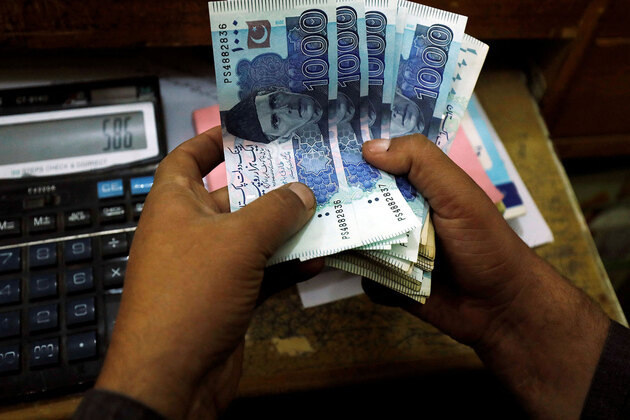
Islamabad [Pakistan], February 2 (ANI): Nearly two months after its inaugural session amid high expectations, Pakistan's National Finance Commission (NFC) appears to have stalled, with its second meeting, initially planned for mid-January, yet to materialise, raising concerns over delays in finalising the long-pending 11th NFC award.
According to Dawn, informed sources said the commission's eight technical working groups have also made little progress, with only two holding a single meeting so far, while the remaining six have not convened at all since their notification in the second week of December.
Following the first NFC meeting on December 4, officials from the Ministry of Finance and provincial governments had announced that the next session would take place between January 8 and January 15, setting the stage for monthly meetings aimed at concluding recommendations after a gap of more than 15 years.
However, that timeline has slipped.
Sources said the only working group that moved quickly was the one examining the merger of the former federally administered tribal areas into Khyber Pakhtunkhwa and its impact on the province's NFC share.
Led by KP Finance Minister Muzammil Aslam, the group sought detailed calculations from the federal finance secretary on how the ex-FATA allocation would affect other provinces but remains unable to proceed further without that data.
Another group, focused on divisible pool taxes and led by Finance Minister Muhammad Aurangzeb, met once in late January to begin discussions on whether new taxes should be added to the shared pool or existing ones removed.
The federal government has been exploring legal grounds to exclude customs duty, arguing that international trade falls under federal jurisdiction.
Dawn reported that none of the remaining six groups have held meetings, signalling limited momentum in advancing consultations on how resources should be shared among the federation and the four provinces.
An official at the Ministry of Finance attributed the slowdown to overseas engagements of Aurangzeb and Finance Secretary Imdadullah Bosal, while a provincial chief minister countered that both the working groups and the main NFC meeting were delayed due to the absence of federal representatives.
The six pending groups cover vertical distribution between the centre and provinces, national debt composition, improving the tax-to-GDP ratio, straight transfers to provinces, criteria for horizontal distribution, and sharing federal expenses in provincial domains.
At the December 4 meeting, Sindh objected to including expenditure discussions, arguing that the NFC's constitutional role is confined to revenue sharing.
The federal government has since sought legal advice suggesting expenditures could also be debated within the NFC forum, Dawn reported.
At the inaugural session of the 11th NFC, the centre proposed mobilising over 5 per cent of gross domestic product in additional revenues over three years, roughly 6.5 trillion Pakistani rupees annually at current rates.
It also urged provinces to lift their own collections to 3 per cent of GDP through property taxes, agricultural income levies and sales tax on services, which currently contribute less than 1 per cent.
The federal government framed these targets as essential to address a widening fiscal deficit that has grown by around 3 per cent since 2010, following what it termed a 'fiscal imbalance' under the 7th NFC award.
The deficit has increased from about 4 per cent to over 6.6 per cent, significantly worsening debt-to-GDP ratios.
It had earlier been announced that the second NFC meeting would depend on the readiness of working-group reports, expected to cover horizontal and vertical resource sharing, taxation strategies, and the impact of debt servicing and poverty.
A special group was also formed at KP's request to assess the fiscal and social consequences of merging tribal districts.
The 11th NFC was constituted on August 22, though its first meeting was repeatedly postponed before finally taking place on December 4.
The commission operates under Article 160 of Pakistan's Constitution, which mandates the distribution of proceeds from key taxes, including income tax, sales tax, excise duties and specified export duties.
Under International Monetary Fund recommendations, the centre has also pushed for provinces to share more costs related to natural disasters, health programmes and large infrastructure projects.
It has called for moving away from population-based incentives in favour of social sector performance metrics, a shift informally supported by Punjab and Khyber Pakhtunkhwa.
The NFC must also allocate funds for Pakistan-occupied Jammu and Kashmir (PoJK), Pakistan-occupied Gilgit-Baltistan (PoGB) and the newly merged districts of Khyber Pakhtunkhwa.
The last major award, the 7th NFC finalised in 2009, remained in force for 15 years instead of the constitutionally mandated five.
It raised the provincial share to 57.5 per cent from about 47 per cent, later increasing to roughly 59 per cent after special allocations to Balochistan, Khyber Pakhtunkhwa and Sindh, reducing the federal share to 42.5 per cent.
In subsequent years, however, the centre introduced a petroleum levy estimated at about 1.5 trillion rupees and secured around 1.5 trillion rupees in provincial cash balances, effectively shifting the fiscal balance back in its favour.
Provinces also failed to meet commitments under the 7th NFC to raise revenues by 0.5 per cent of GDP annually, while the centre did not fulfil its pledge to increase collections by 1 per cent each year, sources said.
Various stakeholders, including the finance ministry, armed forces and the International Monetary Fund, have advocated rebalancing resource transfers toward the centre, though the Constitution bars reductions in provincial shares and requires consensus among all five parties.
Currently, provincial allocations are based on population, poverty, revenue collection and inverse population density, giving Punjab 51.74 per cent, Sindh 24.55 per cent, Khyber Pakhtunkhwa 14.62 per cent and Balochistan 9.09 per cent. (ANI)
Get a daily dose of Greek Herald news through our daily email, its complimentary and keeps you fully up to date with world and business news as well.
Publish news of your business, community or sports group, personnel appointments, major event and more by submitting a news release to Greek Herald.
More InformationIslamabad [Pakistan], February 2 (ANI): Nearly two months after its inaugural session amid high expectations, Pakistan's National Finance...
Shimla (Himachal Pradesh) [India], February 2 (ANI): Tourism stakeholders in Himachal Pradesh have welcomed the Union Budget's emphasis...
Gandhinagar (Gujarat) [India], February 1 (ANI): Chief Minister Bhupendra Patel stated that the budget for the year 2026-27, presented...
Shanghai [China], February 1 (ANI): Consulate General of India to Shanghai, Pratik Mathur, attended the inaugural ceremony of Air India's...
Shanghai [China], February 1 (ANI): The Consulate General of India in Shanghai, under the leadership of Consul General Pratik Mathur,...
Over the past year, the euro has appreciated by about 14.4 percent, driven by uncertainty surrounding U.S. economic policy and heightened...
Washington, DC [US], February 2 (ANI): Indian Ambassador to the United States Vinay Mohan Kwatra participated in a Pre-AI Summit panel...
New Delhi [India], February 2 (ANI): Congress MP Manickam Tagore on Monday moved an adjournment motion in Lok Sabha to discuss the...
Washington DC [US], February 2 (ANI): American allies in the Persian Gulf have cautioned Washington that Iran's missile capabilities...
Tel Aviv [Israel], February 2 (ANI): Israel on Sunday (local time) announced the partial reopening of the Rafah border crossing between...
Irans Supreme Leader has accused Washington of seeking to devour Iran and seize its oil President Donald Trump has said the world...
Trump says Iran is seriously talking with U.S. U.S. President Donald Trump said on Saturday that Iran was seriously talking with...