RT.com
25 Jan 2026, 23:51 GMT+10
Why MAGA isolationism undermines the very foundations of US power
Briefly, the MAGA doctrine and Trumpism can be summed up as follows: The US steps back from its role as a global leader, dropping the associated burdens and focusing on domestic development.
This shift assumes that America is a self-sufficient nation. But that's misleading; modern America is better described as the world's metropolis. The US relies on the rest of the world just as much as the world depends on the US. And a decision to sever this mutual dependency and withdraw from its leadership role will hit America hardest. Let's see why.
It's true that the US still boasts one of the most innovative economies. But what's driving the innovation? Through quantitative easing (as the meme goes, 'money printer goes brrrr'), the economy is flooded with free money, pumping the stock market and allowing companies to enjoy nearly unlimited investments. It's a kind of scattershot approach - throwing everything at the wall to see what sticks.
This process doesn't ignite inflation because the dollar, due to its status as the world's reserve currency, maintains high demand outside the US. In fact, you could argue that the dollar is America's chief export, and the influx of dollars into domestic markets doesn't lead to oversupply thanks to ongoing exports.
Sure, the US attracts the best minds from around the globe. But why? Because everyone gravitates toward the metropolis where money and opportunities are abundant.
The US also remains the largest market in the world. But again, this comes down to two factors: Limitless money generated from thin air and the fact that all global processes are tied to America. All roads lead to Rome.
These dynamics underpin America's current status, which can only exist in a unipolar world with the US at the helm. America's prosperity and the challenges it faces today stem directly from its role as the world's metropolis. Remove any of the above-mentioned factors, and everything else will crumble.
Speaking of challenges, viewing the US as a metropolis helps explain many of the social imbalances prevalent today. The loss of manufacturing jobs? That's understandable, since any capital offshores production to remote regions where land and labor are cheaper. The prevalence of poverty and rising inequality? Again, this is typical for a metropolis where the bottom rung often consists of those who moved in from the provinces and couldn't climb the socioeconomic ladder. The overabundance of service jobs? That's also normal for the financial and bureaucratic center of the planet.
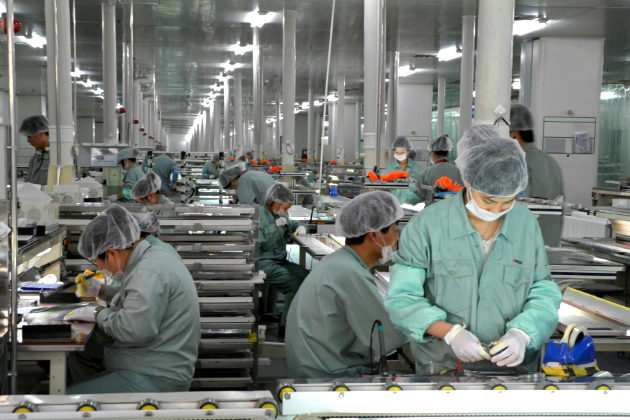
I'm typing this text on a MacBook. Formally, it's an American product - but is it really? Apparently not: The MacBook cannot be manufactured in the US - it can't even be developed there. Like many American companies, Apple outsources numerous engineering tasks abroad. This product is the result of the global landscape created by America, just like American airplanes, rockets, big pharma, and much of the military production. In the metropolis, only the tip of the iceberg remains: Management, marketing, finance, and occasionally, some segments of production.
So what lies ahead? To continue the business analogy, picture a large multinational corporation. Though it's unprofitable, it's also massive. Its headquarters thrives on turnover, and as long as the company is operational, everything seems fine at the top. They're pouring money into grand projects and building luxurious new offices. And of course, there are generous salaries and golden parachutes for executives.
But once disruptions start tearing through the supply chains, once markets begin to slip away - that's when things take a turn for the worse. There's no way to maintain that prosperity in the headquarters, the heart of the corporation. In fact, the loss of global market access and the unraveling of transnational ties will hit hardest at the center.
Isolationism primarily impacts the headquarters - the metropolis, since the higher you climb, the harder you fall. Russia experienced something similar. In the 1990s, it fell from the pedestal of superpower status. The collapse of the Soviet Union hit Russia the hardest as the metropolis of 'the second world'.
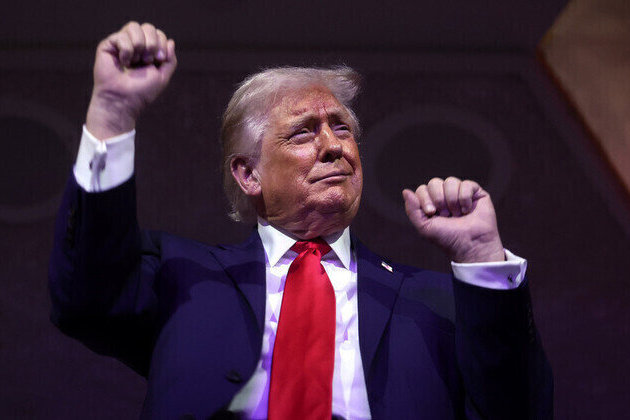
Recently, in the US, there's been a growing rift between MAGA purists and the Trump administration. Upon taking office, Trump, drawing from his business background, acted like a classic crisis manager: Cutting costs, optimizing staff, shutting down unprofitable ventures - all backed by supporters of the 'America First' mantra.
However, it seems that in his attempt at 'perestroika', Trump encountered not only political pushback from the 'deep state', but also the stark reality that making significant changes risks triggering the collapse mentioned earlier.
Imposing tariffs on international cooperative products? That's absurd - a metropolis can't afford to disrupt supply chains so recklessly.
Deporting migrants en masse? Impossible - any metropolis needs labor and thrives on the influx of fresh talent from the outlying regions.
Withdrawing from international affairs? That's downright suicidal - it would lead provinces to break away one after another, creating the cascade effect we've discussed.
Even attempts to cut borrowing have proven impossible, as this threatens economic depression and could collapse the consumer-driven American economic model.
Essentially, Trump is reverting to the old inertia-driven course - one that is similarly steering Pax Americana toward fragmentation and the US itself toward disaster and deep decline.
(RT.com)
Get a daily dose of Greek Herald news through our daily email, its complimentary and keeps you fully up to date with world and business news as well.
Publish news of your business, community or sports group, personnel appointments, major event and more by submitting a news release to Greek Herald.
More InformationBEIJING, China: China's exporters set records abroad in 2025, but for many of the salespeople behind those numbers, the year brought...
Why MAGA isolationism undermines the very foundations of US power Briefly, the MAGA doctrine and Trumpism can be summed up as follows:...
BEIJING, Jan. 25 (Xinhua) -- At the recent World Economic Forum Annual Meeting 2026, claims were made that China produces large numbers...
New Delhi [India], January 25 (ANI): India enters the year 2026 with a relatively strong macroeconomic footing, even as global markets...
New Delhi [India], January 25 (ANI): India's foreign exchange reserves rose sharply, by USD 14.167 billion in the week that ended January...
(Photo credit: Andy Abeyta/The Desert Sun / USA TODAY NETWORK via Imagn Images) South Korea's Si Woo Kim shot 6-under par 66 and...
DUBLIN, Ireland: In a poll launched by tech billionaire Elon Musk asking whether he should buy Ryanair, more than 30 million people...
BERLIN, Germany: Europe's two largest manufacturing economies are urging the European Union to move faster on reforms, warning that...
BRUSSELS, Belgium: European governments are weighing a sweeping trade response to pressure from Washington over Greenland, as tensions...
(Photo credit: David Gonzales-Imagn Images) Novak Djokovic advanced to the quarterfinals of the Australian Open after his scheduled...
ABU DHABI, 25th January, 2026 (WAM) -- The United Arab Emirates and the Republic of Cyprus reaffirmed the depth of their strategic...
(Photo credit: Marc Lebryk-Imagn Images) Patrick Reed took a conservative approach to the final round on Sunday at the Hero Dubai...