Xinhua
24 Oct 2025, 12:45 GMT+10
Analysts note that although the European Commission has articulated a clear blueprint for the EU's strategic defense autonomy, headwinds, including financing, technology and internal divisions, raise doubts about the bloc's ability to translate it into action.
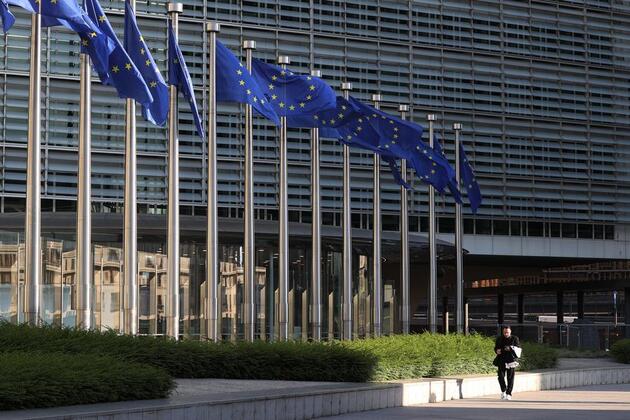
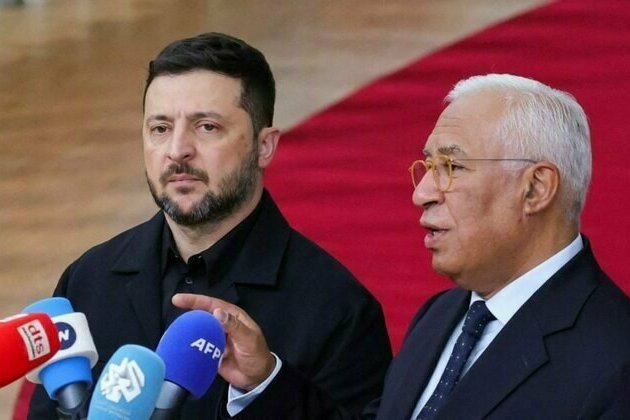
BRUSSELS, Oct. 24 (Xinhua) -- The European Council concluded its leaders' summit in Brussels on Thursday night, reaffirming its commitment to continued support for Ukraine but leaving the matter of using Russian frozen assets to pay for it postponed to the next round of talks.
Analysts note that although the European Commission has articulated a clear blueprint for the EU's strategic defense autonomy, headwinds, including financing, technology and internal divisions, raise doubts about the bloc's ability to translate it into action.
LIMITED CONSENSUS
As one of the important items on the agenda, deliberations on Ukraine drew wide attention. To further support Ukraine, the European Commission has been advancing a plan to use Russia's frozen assets in Europe to back a 140 billion-euro "reparation loan" for Ukraine. After rounds of debate at the summit, EU leaders, however, only agreed "to revert to this issue at its next meeting."
Roughly 90 percent of the frozen Russian assets in the EU are held by Euroclear, one of the world's largest settlement and clearing systems headquartered in Belgium. Under the "reparation loan" scheme, Ukraine would be required to repay the loan only after Russia pays war reparations.
Jian Junbo, director of the Center for China-Europe Relations at Shanghai-based Fudan University, said that the "reparation loan" lacks feasibility because Russia does not recognize any liability for reparations.
In this context, Belgian Prime Minister Bart De Wever became the biggest obstacle, demanding guarantees from all EU states to share any legal and financial risks if Russia retaliates. He insisted that other countries also tap Russian assets, warning he would "do everything" in his power to block the plan at the summit if they do not.
Prime Minister of Luxembourg Luc Frieden said that he would only support using Russian assets to issue a "reparation loan" to Ukraine, under the condition that the EU must first "make sure that it is legally sound."
Italian Prime Minister Giorgia Meloni also said that the EU must "safeguard the financial and monetary stability of our economies and the euro area" in considering any measures involving Russian assets, ahead of the summit on Wednesday.
AMBITIOUS VISION
Against the backdrop of the U.S. retreat from its security commitments to Europe under the Trump administration, the latest summit further underlined the EU's ambition to achieve defense autonomy.
During the summit, the European Council urged member states to work on all the priority capability areas set out at the EU level, as stated in the Defense Readiness Roadmap 2030 previously submitted by the European Commission, so that Europe can develop a full spectrum of modern defense capabilities in close coordination with the North Atlantic Treaty Organization (NATO).
Its ultimate goal is to ensure that by 2030, Europe possesses robust defense forces capable of effectively deterring adversaries and responding to any act of aggression.
The Roadmap identifies four flagship projects to achieve the target: the European Drone Defense Initiative, the Eastern Flank Watch, the European Air Shield, and the European Space Shield, all aimed at closing key capability gaps through joint development and procurement.
However, Fabian Zuleeg, chief economist at European Policy Center, a Brussels-based think tank, noted that while the Roadmap is a necessary step, it will be challenging to deliver on it.
Turning ambition into real capability will require overcoming political hesitation, industrial bottlenecks and tight national budgets, Zuleeg said, adding that some member states remain cautious about binding commitments and joint procurement.
Progress will depend on whether Europe can turn pledges into contracts and build a genuinely integrated defense industrial base by 2030, he said. "This will not be easy."
DEFENSE AUTONOMY UNFEASIBLE
Analysts say the summit did not explicitly "endorse" the Roadmap 2030, but instead called on member states to "operationalize" it. This careful wording, they note, reflects the multiple constraints that continue to weigh on Europe's pursuit of strategic defense autonomy.
Security and defense lie at the very core of sovereignty, an area where EU countries have always been wary of ceding control. Major member states such as France and Germany have viewed the Roadmap as an attempt by the European Commission to intrude into national defense policymaking.
The Roadmap remains largely a conceptual framework at the Commission level, forming part of the EU's broader push for defense integration, a politically sensitive issue on which member states are expected to stay divided, Jian said.
Wang Mingjin, a professor at the School of International Relations and Diplomacy at Beijing Foreign Studies University, underscored another aspect of the challenge.
"European countries may continue to propose and advance various defense or integration projects in the short term, but they still rely heavily on NATO and the United States in matters of security and defense," he said, adding that such dependence will prevent Europe from achieving genuine defense autonomy.
Experts also said that the bloc's limited fiscal capacity could constrain the implementation of the Roadmap. Several member states are already under financial strain, and the EU's proposal to use frozen Russian assets to aid Ukraine, despite the legal risks, further demonstrates the financial pressures Europe is facing.
Jian said that projects such as the European Space Shield or drone defense systems face uncertain prospects due to funding shortfalls. Consequently, he said, even if these initiatives move forward in procedural terms, they are likely to remain largely on paper in the near future.
Get a daily dose of Greek Herald news through our daily email, its complimentary and keeps you fully up to date with world and business news as well.
Publish news of your business, community or sports group, personnel appointments, major event and more by submitting a news release to Greek Herald.
More InformationThe European Union is pushing ahead with plans to use frozen Russian state funds as the basis for a so-called reparations loan for...
The European Union is pushing ahead with plans to use frozen Russian state funds as the basis for a so-called reparations loan for...
Analysts say the shift reflects the growing impact of U.S. tariffs and trade barriers, which are straining transatlantic economic ties...
Belgiums demand for robust legal guarantees has reportedly stalled plans to provide Kiev with a loan financed by Moscows funds EU...
Dehradun (Uttarakhand) [India], October 23 (ANI): The central government has recommended Uttarakhand's project 'Strengthening Public...
Dubai [UAE], October 23 (ANI/WAM): The Ministry of Finance (MoF), in collaboration with the International Monetary Fund (IMF) and Zayed...
Analysts note that although the European Commission has articulated a clear blueprint for the EU's strategic defense autonomy, headwinds,...
Tel Aviv [Israel], October 24 (ANI): US Vice President JD Vance concluded his visit to Israel, which celebrated the implementation...
New York [US], October 24 (ANI): India's Permanent Representative to the UN, Parvathaneni Harish, on Thursday (local time) addressed...
CPC plenum concludes, adopting recommendations for China's 15th Five-Year Plan The 20th Central Committee of the Communist Party...
Tel Aviv [Israel], October 24 (ANI): Israeli Prime Minister Benjamin Netanyahu on Thursday met US Secretary of State Marco Rubio in...
Brussels [Belgium], October 23 (ANI): Ukrainian President Volodymyr Zelensky said he met French President Emmanuel Macron in Brussels...