Xinhua
15 Oct 2025, 16:15 GMT+10
Peace cannot be built on pressure or expediency; it must rest on mutual recognition and respect.
CAIRO, Oct. 15 (Xinhua) -- Following the conclusion of a high-profile peace summit in Sharm el-Sheikh, Egypt, Gaza has entered a long-awaited moment of calm.
The implementation of the first phase of the Gaza ceasefire agreement has drawn global attention. For many, the celebration of this hard-won truce is also a moment of reflection -- on the sorrow and suffering of the past two years, and on a collective wish for a durable peace in the Middle East.
Yet amid the jubilation, there remains a sober recognition that the road to peace is fraught with challenges. As Mideast leaders urged Israel to honor the agreement, the United States has cautioned Hamas. Meanwhile, the Houthis have vowed to "remain on high alert should Israel violate the agreement."
Years of turmoil in the Middle East have crushed aspirations for peace. The recent cycles of ceasefire and renewed fighting in the Israeli-Palestinian conflict illustrate this grim reality. The world hopes the truce this time will be different, an actual turning point toward lasting peace.
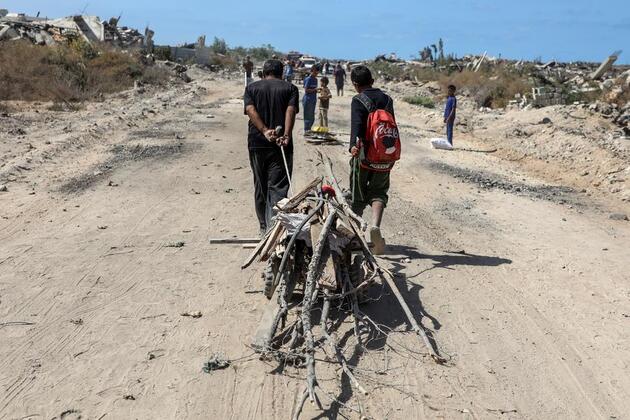
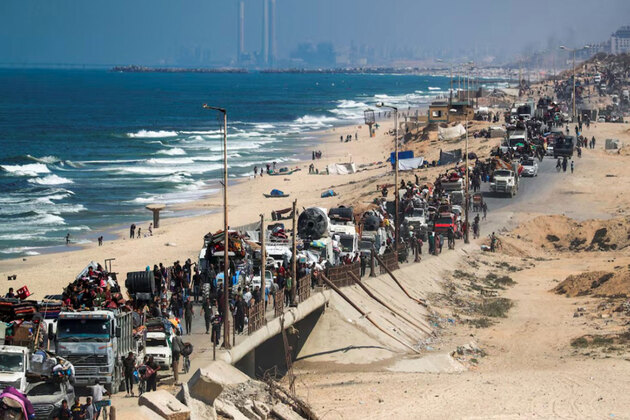
The two-year-long conflict has left Gaza deeply scarred: 67,000 lives lost, direct economic losses of 70 billion US dollars, 90 percent of buildings destroyed in Gaza, and more than one million displaced. The wounds of Gaza have become a painful chapter in human history. Israel has also paid a heavy price with division at home, international isolation, moral condemnation, high military expenditures, and personnel losses.
For both peoples, peaceful coexistence remains the only viable path forward. The two-state solution continues to be the most realistic and just framework for resolving the Israeli-Palestinian issue. Yet, regrettably, both the U.S.-proposed "20-point plan" and the newly signed ceasefire agreement lack concrete steps toward implementing that vision. History has shown time and again that without genuine progress on the two-state solution, true peace will remain elusive.
Post-conflict governance in Gaza also harbors potential triggers for future conflicts. A long road remains ahead to translate issues such as international supervision, Palestinian self-governance, and Hamas's status from paper into action, with uncertainties increasingly difficult to predict.
Moreover, meeting the urgent needs of 2.1 million Gaza residents is already a formidable task, not to mention addressing numerous practical challenges, including funding, technology and manpower associated with rebuilding Gaza.
The Israeli-Palestinian issue lies at the core of numerous conflicts in the Middle East. Peace between Israelis and Palestinians remains a prerequisite for stability in the region. With the Gaza ceasefire in place and prisoner exchanges underway, a glimmer of hope for peace has appeared. Negotiations on the second phase of the ceasefire are on the agenda for both sides. The immediate priority is to realize a comprehensive and lasting ceasefire in Gaza, effectively alleviate the humanitarian crisis, and restore regional stability.
Peace cannot be built on pressure or expediency; it must rest on mutual recognition and respect. Only when Israelis and Palestinians genuinely accept each other's right to exist and to develop can renewed hostilities be prevented. History has repeatedly proven that illusions of total victory or the destruction of one side bring only deeper insecurity and enduring pain.
External powers should also fully recognize that pursuing narrow interests, scheming, abandoning principles to favor one side, or even instigating conflict will ultimately be condemned by the international community. An unstable Middle East affects the stability for the whole world. Upholding fairness and justice to mediate and promote dialogue aligns with the interests of both Israelis and Palestinians as well as the international community.
To prevent repeated humanitarian disasters in Gaza, a comprehensive, just, and lasting solution to the Palestinian issue is the only way forward.
Get a daily dose of Greek Herald news through our daily email, its complimentary and keeps you fully up to date with world and business news as well.
Publish news of your business, community or sports group, personnel appointments, major event and more by submitting a news release to Greek Herald.
More InformationMumbai (Maharashtra) [India], October 15 (ANI): Telecom major Bharti Airtel has entered into a strategic partnership with IBM to augment...
Kristalina Georgieva has commended the South Asian nation for its bold economic and structural reforms International Monetary Fund...
SMPL Noida (Uttar Pradesh) [India], October 15: Symbiosis Institute of Business Management (SIBM) Noida successfully organised a...
SMPL Pune (Maharashtra) [India], Ocotber 15: Sri Balaji University (SBUP) Pune, a premier institution for value-based and industry-driven...
New Delhi [India], October 15 (ANI): Indian markets opened on a cautious note on Wednesday, following mixed global cues and renewed...
The Commerce Ministrys latest export control documents were released using local WPS software instead of the US-developed Word China...
STRASBOURG, France: European Commission President Ursula von der Leyen warned this week that a wave of recent drone incursions and...
Peace cannot be built on pressure or expediency; it must rest on mutual recognition and respect. CAIRO, Oct. 15 (Xinhua) -- Following...
Tel Aviv [Israel], October 15 (ANI/TPS): An Israeli security official briefing reporters on Wednesday morning said one of the four...
Tel Aviv [Israel], October 15 (ANI/TPS): Israel's Zikim Beach, next to the Gaza Strip, will reopen to the public on Thursday for the...
The US presidents statement follows a major prisoner swap under a ceasefire deal between the militant group and Israel Hamas must...
New Delhi [India], October 15 (ANI): Egypt's Foreign Minister, Badr Abdelatty, will be in India later this week. The high-profile visit...