Xinhua
12 Sep 2025, 09:45 GMT+10
I left Gaza, but Gaza never left me.
I just can't help but wonder: How many more bombs have to be dropped, how many more homes have to be destroyed, and how many more people have to be killed, before those who have the power to decide Gaza's fate say enough?
by Emad Drimly
CAIRO, Sept. 12 (Xinhua) -- On the morning of Sept. 12, 2005, I stood on a sun-drenched street in Gaza amid a tide of cheering Palestinians. The last Israeli soldiers had left; barbed wire lay curled on the ground; and the air was electric with hope.
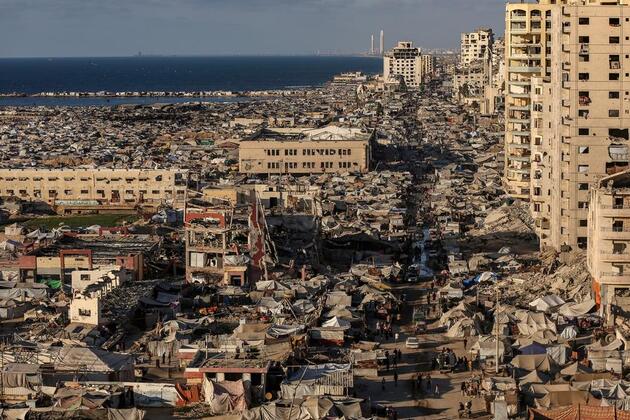
Today, with Israel ordering the full evacuation of Gaza City and pounding entire districts into rubble in its most intensive offensive since the latest conflict began in October 2023, that hope feels like a relic from another era.
I can still remember the old woman who gripped my hand 20 years ago, her eyes gleaming with tears. "We have finally taken a breath ... This is a holiday ... The occupation is over. Tell the youth to protect the land," she told me. Her words were both a blessing and a warning, haunting me through years of blockade, division and war.
Back then, I was a young journalist with a camera, a notebook and a head full of questions: Will Israel's unilateral withdrawal bring real freedom to Gazans? Or is this merely a pause in a longer, darker story?
In the months that followed the withdrawal, hope felt tangible. But by 2006, elections divided us. By 2007, Hamas and Fatah turned guns on each other. Gaza became imprisoned from within.
Then the crossings closed, and the blockade began. I watched patients begging for permits to leave for treatment, students missing scholarships, and fishermen sailing only as far as guns allowed. Electricity came for a few hours a day, water turned salty, and jobs disappeared.
Yet even then, Gaza resisted. Weddings took place in dusty alleys. Cafes opened their doors to crowded gatherings. Children kicked balls against walls scarred by bullets.
Then came the wars between Palestinian factions and Israel in 2008, 2012, 2014 and 2021, each more destructive than the previous one. I mourned for my well-acquainted neighbors killed by Israeli airstrikes, followed ambulance crews through smoke and rubble, documented flattened neighborhoods, and talked with families seeking shelters in overcrowded schools.
My own children would ask me the same questions every night: "Why is this happening? Will we survive? Could they bomb us tonight?" I never knew how to answer.
But nothing could have prepared us for Oct. 7, 2023.
Hamas attacked Israel. Israel declared war. This time was different -- deeper, wider, even endless to some Gazans. For seven months, I lived between two roles: journalist and father. By day, I filmed destruction; By night, I tried to shield my family from it.
We fled twice, from Gaza City to a friend's house in Deir al-Balah, then to a tent in central Gaza. Each move meant less safety, less food, less dignity.
My father, sick with diabetes and heart disease, collapsed one night. Doctors at the nearby field hospital told me they had no medicine, no IV fluids, only water and painkillers. I had to carry him back home under a sky lit by drones, fearing each breath he took might be his last.
That same night, my eldest son whispered to his siblings: "If I die, tell my father I love him." I stood outside the tent, weeping silently. His words pierced my heart even deeper than the bombs.
I never thought I would leave Gaza. But when the choice became death or exile, I chose exile.
Crossing into Egypt through Rafah was one of the most difficult decisions I have ever made. I carried only a small bag with documents, leaving behind my relatives, my friends and my destroyed home.
Now I am in Cairo. Life here is calmer, but I still wake up every night to check on my relatives and friends in Gaza, struggling with the guilt of survival while many Gazans remain under fire.
From Cairo, I am watching the news -- the bombs, the protests and the debates. I saw Western leaders finally considering recognition of a Palestinian state, and I heard U.S. officials issuing "final warnings" to Hamas.
But on the ground, nothing changes: Gaza is still no closer to freedom; Only the scale of the suffering grows.
Israel, out of its planned offensive to seize the enclave's largest urban center, has ordered the entire population of Gaza City to evacuate. Tanks are advancing into dense urban neighborhoods. Families who have already been displaced multiple times are now being told to leave again, to so-called "humanitarian zones" already overwhelmed with people.
The same streets where we danced 20 years ago are now being flattened by bulldozers and bombs.
The numbers are staggering: Over 64,000 Palestinians have been killed, more than half of them children, women and the elderly. Those lucky enough to have survived are facing a deepening famine.
I just can't help but wonder: How many more bombs have to be dropped, how many more homes have to be destroyed, and how many more people have to be killed, before those who have the power to decide Gaza's fate say enough?
Even now, I still see resilience in Gaza. Children are learning in makeshift classrooms in tents, volunteers are digging wells with bare hands and nurses are delivering babies by phone light. Gazans are more than numbers; we are people who know sadly well what it is like to hope.
I left Gaza, but Gaza never left me. It lives in my dreams, in my fears, and in my children's questions. I hope -- yes, I still hope -- to return someday to a Gaza that is free.
Not free from occupation alone, but free from fear. Free to live.
Get a daily dose of Greek Herald news through our daily email, its complimentary and keeps you fully up to date with world and business news as well.
Publish news of your business, community or sports group, personnel appointments, major event and more by submitting a news release to Greek Herald.
More InformationNew Delhi [India], September 12 (ANI): Saurabh Dalela, Director, International Centre for Automotive Technology (ICAT), has stated...
BEIJING, Sept. 12 (Xinhua) -- Global tourism is experiencing a profound revolution, powered not by guidebooks, but by algorithms and...
Former Brazilian President Bolsonaro sentenced to over 27 years in prison Former Brazilian President Jair Bolsonaro was sentenced...
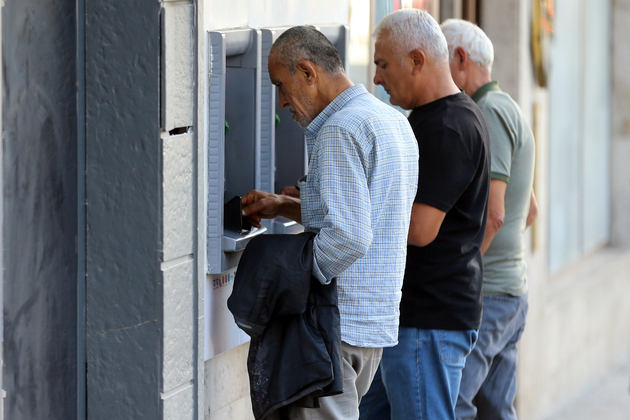
(250911) -- ANKARA, Sept. 11, 2025 (Xinhua) -- People withdraw money from ATMs in Ankara, Trkiye, on Sept. 11, 2025. Trkiye's central...
by Burak Akinci ANKARA, Sept. 11 (Xinhua) -- Trkiye's central bank cut interest rates on Thursday to boost investment and growth...
BEIJING, Sept. 11 (Xinhua) -- The services trade is becoming an increasingly crucial engine for China's economic growth and has substantial...
I left Gaza, but Gaza never left me. I just can't help but wonder: How many more bombs have to be dropped, how many more homes have...
Brussels [Belgium], September 12 (ANI/WAM) The European Council announced Thursday that the first-ever summit between the European...
BEIJING, Sept. 12 (Xinhua) -- Global tourism is experiencing a profound revolution, powered not by guidebooks, but by algorithms and...
Former Brazilian President Bolsonaro sentenced to over 27 years in prison Former Brazilian President Jair Bolsonaro was sentenced...
Rome [Italy] September 12 (ANI): Italian Prime Minister Giorgia Meloni on Thursday paid tribute to the victims of the September 11,...
New Delhi [India], September 12 (ANI): Indian men's compound team member Rishabh Yadav expressed his feelings after the Indian men's...