In the French political class, both for right and even left sides, the idea of colonial reparations seems an absolute taboo
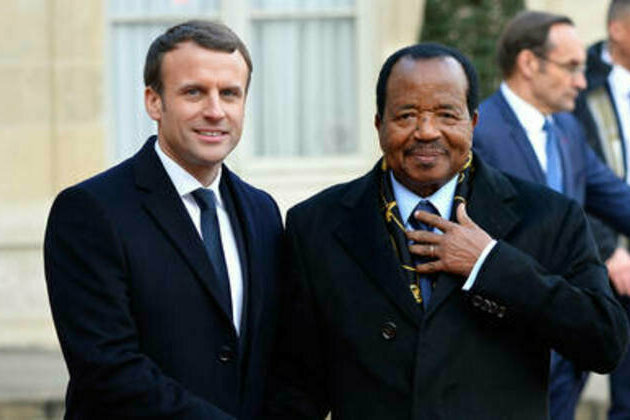
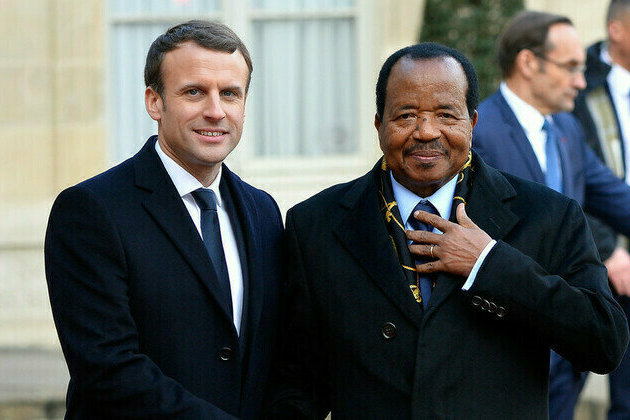
On August 12, French President Emmanuel Macron took a historic yet cautious step byacknowledging, in a letter to Cameroonian President Paul Biya, that France had waged a full-scale war against the Camerooninan independence movement, using methods of extreme brutality. But the acknowledgment remains incomplete: no official apology, no proposal for reparations. Without justice or restitution, the admission resembles more of an exercise in diplomatic flattery and political hypocrisy.
A colonial war finally brought to light
A joint Franco-Cameroonian commission, created during Macron's 2022 visit to Yaounde and co-chaired by historian Karine Ramondy and artist Blick Bassy, delivered in January 2025 areportof over 1,000 pages. Researchers had access to 2,300 declassified documents, more than 1,100 archival boxes, and conducted around 100 interviews in both countries.
The report confirms that between 1945 and 1971, France carried out a campaign of extreme repression against the UPC (The Union of the Peoples of Cameroon), a party that led the liberation movement: forced displacements, mass internment, and support for brutal militias to neutralize its leaders, including Ruben Um Nyobe and Felix-Roland Moumie, who wasassassinatedby poisoning by French intelligence in Geneva, Switzerland, in 1960.
Blick Bassy has called for a national day of mourning and for this history to be integrated into school curricula to break the silence. Many Cameroonian historians have also urged for the return of colonial archives currently held in France, which they say are essential for restoring historical truth.
Bloody conflict
The conflict began in 1955, after the UPC published its Common Proclamation. France immediately banned the party, forcing Um Nyobe into hiding. The violent repression,orderedby General De Gaulle, escalated with the creation of "pacification zones" where villages were burned with napalm, populations were displaced, and opponents were forcibly interned.
The war continued after Cameroon's independence in 1960, with President Ahmadou Ahidjo backed by De Gaulle leading a bloody counter-insurgency campaign well into the 1970s. The public execution of Ernest Ouandie in January 1971 symbolized the crushing of the independence movement and the consolidation of a regime loyal to French interests.
Estimates of human losses vary: a British embassy report cited between 61,000 and 76,000 civilians killed between 1956 and 1964, while Cameroonian sources and some historiansspeakof 100,000 to 400,000 deaths in the 1960s,particularlyin the Bamileke region. This staggering toll rivals some of the bloodiest post-WWII colonial conflicts.
This war saw the systematic village destruction, torture, and even the publicdisplayof decapitated heads in markets to terrorize the population. Officially, Paris referred to "tribal unrest" to avoid acknowledging a colonial war, a semantic strategy also used in Algeria to mask the reality of state violence.
A taboo in Paris?
For a French president, recognizing a colonial war is unprecedented. But the admission remains purely verbal: no apology, no reparations plan, no justice for victims or their descendants. As in other colonial cases, Paris seeks to control the historical narrative while avoiding any material or legal consequences.
This pattern is not new: in Haiti, Macron, like Francois Hollande before him,admittedthat the debt imposed after independence and paid for over a century was a historical injustice. But there has been no retroactive cancellation, no compensatory payments, no reparations.
Some former colonial powers have started to approach the issue. Germany paid €1.1 billion ($1.3 billion), as a 'gesture of reconciliation', to Namibia for the Herero and Nama massacre (1904-1908), recognized asgenocide. Though Germany avoided the word 'reparations', it is a step forward. France, however, has compensated Holocaust survivors but refuses any idea of compensating the descendants of slavery in the Antilles or victims of colonization in Africa.
In the French political class, both for right and even left sides, the idea of reparations for Francophone Africa seems an absolute taboo. Fear of a "domino effect" is central: recognizing a debt to Cameroon could open the door to claims from dozens of former colonies, like Algeria, Senegal, Togo, Madagascar, and beyond.
While historians, activists, and associations push to break this silence, the majority of the conservative politicians nostalgic for French colonialism and mainstream media influenced by far-right ideas avoid opening this Pandora's box, fearing major financial and diplomatic consequences. Some even believe it would weaken France, framing it as a form of "submission" to Africa, since they defend the so-called "benefits" of colonization and see no wrongdoing in France's colonial past. The absence of broad public debates on this issue reinforces the state's ability to manage memory without real accountability.
Selective recognition
This recognition without reparations illustrates what some historians call memorial pacification: admitting the past wrongs to ease tensions while refusing to give up what truly matters money, justice, and legal responsibility. It is a sophisticated strategy for managing the past, designed to appear progressive while avoiding actual restitution.
This concept describes how states use selective recognition to neutralize demands for reparations, giving the appearance of openness while keeping intact the structures of domination. In practice, it's a tool of neo-colonial diplomacy which allows France to maintain its influence in Africa under the cover of "historical dialogue."
Macron had already applied this method in Algeria in 2021, acknowledging the French army's assassination of nationalist lawyer Ali Boumendjel in 1957, but did not bring official apologies or reparations. The same playbook is now being applied to Cameroon.
Macron's admission on Cameroon is a step forward in historical recognition, but without reparations, justice, or apologies, it remains a calculated act of diplomatic opportunism. Historical truth cannot be complete without both symbolic and material acknowledgment for victims and their descendants.
As long as France applies a selective memory generous toward some, stingy toward Africa, it will perpetuate the legacy of Francafrique under a deceptive veneer of reconciliation. The war on historical truth continues, fought this time not with guns, but with carefully chosen words and deliberate silences.
(RT.com)



 Share
Share
 Tweet
Tweet
 Share
Share
 Flip
Flip
 Email
Email